
Categories
Cybersecurity

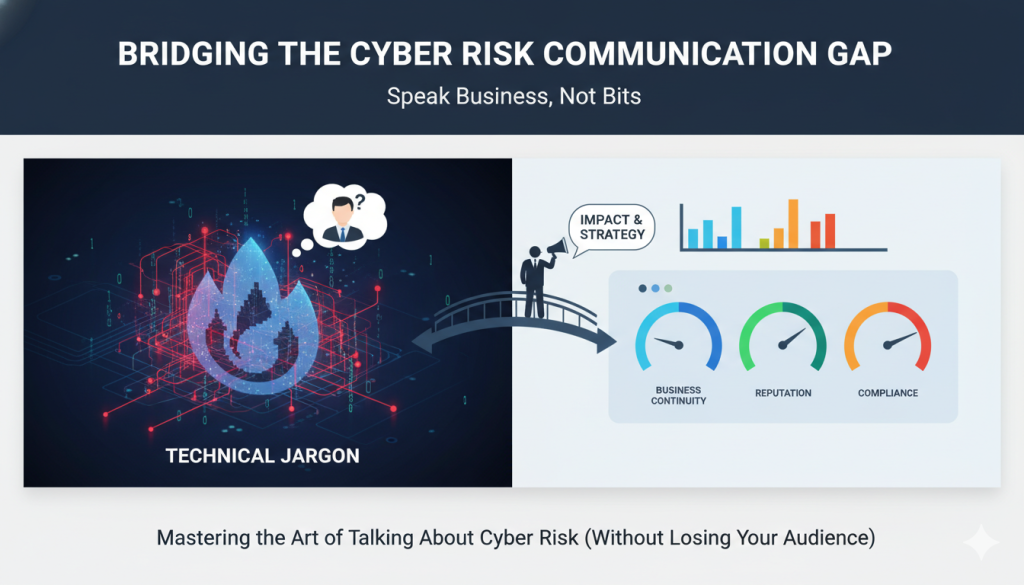
Mastering the Art of Talking About Cyber Risk (Without Losing Your Audience)

Let’s be honest, explaining cybersecurity risk to executives can sometimes feel like translating Shakespeare into emoji. You understand the threats inside and out, but when it’s time to explain them to leadership, eyes start glazing over faster than you can say “phishing simulation.” The problem isn’t that they don’t care, it’s that cybersecurity folks and execs often speak entirely different languages.

So how do you bridge that gap? Let’s dive into some strategies that’ll help you get your message across without anyone needing a decoder ring.

Why Risk Communication Actually Matter

If you want the C-suite to make smart decisions, open their wallets for security projects, or avoid total chaos during a breach, they need to really understand the risks and be able to weigh them against the other business risks. Simple as that.

Here’s why effective communication is your not-so-secret weapon:

  • Informed Decisions: If execs don’t understand the risks, they can’t make smart choices.
  • Budgets and Buy-In: Clear communication helps you justify spending on that shiny new security initiative.
  • Crisis Control: When things hit the fan (and they will), good communication helps keep the ship afloat, and the brand’s reputation intact.

In short: if you can’t explain the risk, you can’t manage it.

Know Your Audience (Hint: They’re Not Security Experts)

Step 1: Figure Out What Keeps Them Up at Night

Executives care about three main things:

  • Business Continuity: Keeping the company running smoothly.
  • Reputation: Making sure they don’t end up in tomorrow’s bad-news headline.
  • Compliance: Staying on the right side of regulators and auditors.

Step 2: Speak Their Language

Skip the acronyms and deep dives into CVEs, they don’t want to hear about packet captures or IDS alerts. Instead, frame your message like this:

  • Talk Business, Not Bits: Focus on impact to revenue, brand trust, and customer experience.
  • Use Context: Compare your company’s risk posture to others in the industry. No one wants to be that company with outdated security.

When in doubt, remember: if you sound like a firewall manual, you’ve already lost them.

How to Get the Message Across

1. Make It Visual

A wall of text won’t win hearts or minds. Use graphs, dashboards, or charts that show trends, vulnerabilities, or attack patterns in a way that’s easy to digest.

Example: Imagine a dashboard that shows the number of threats detected this month versus last month, bonus points if you can make it colorful enough to grab attention without looking like a Vegas slot machine.

2. Tell a Story

Nothing makes risk real like a story. Build short, relevant scenarios, a ransomware attack that locks up operations, a data leak that makes the front page, etc., and show what that would actually mean for the business.

If you really want to drive it home, try role-playing a crisis with execs. (Just be sure to warn them before you pretend the company’s email server is on fire.)

3. Keep Them in the Loop

Out of sight, out of mind, and cybersecurity should never be out of mind. Set up recurring briefings, monthly or quarterly, to keep leadership informed and engaged. Encourage questions. Make it interactive. Over time, this builds trust and reminds them that security isn’t a one-and-done deal.

Turn Insight Into Action

Give Them Something to Do

Don’t just present the risks, hand over a roadmap for fixing them. Include:

  • Mitigation Plans: Clear, actionable steps to reduce each risk.
  • Resource Needs: The people, tools, and dollars it’ll take to get it done.

Measure, Adjust, Repeat

After the meeting, ask for feedback. Did they understand the message? What stuck? What didn’t? Track metrics to show progress over time, it keeps everyone accountable and shows that cybersecurity isn’t just a cost center; it’s an investment.

Wrapping It Up

If you want executives to take cybersecurity seriously, meet them where they are. Speak their language, show them the impact, and make it real.

Your mission: at your next meeting, try one of these techniques. Ditch the jargon, tell a story, and connect the dots between cyber risk and business impact. Because at the end of the day, you’re not just the “security person”, you’re the bridge between technical reality and business strategy.

And if you do it right? They might even stop checking their phones during your presentations.

Categories
Cybersecurity

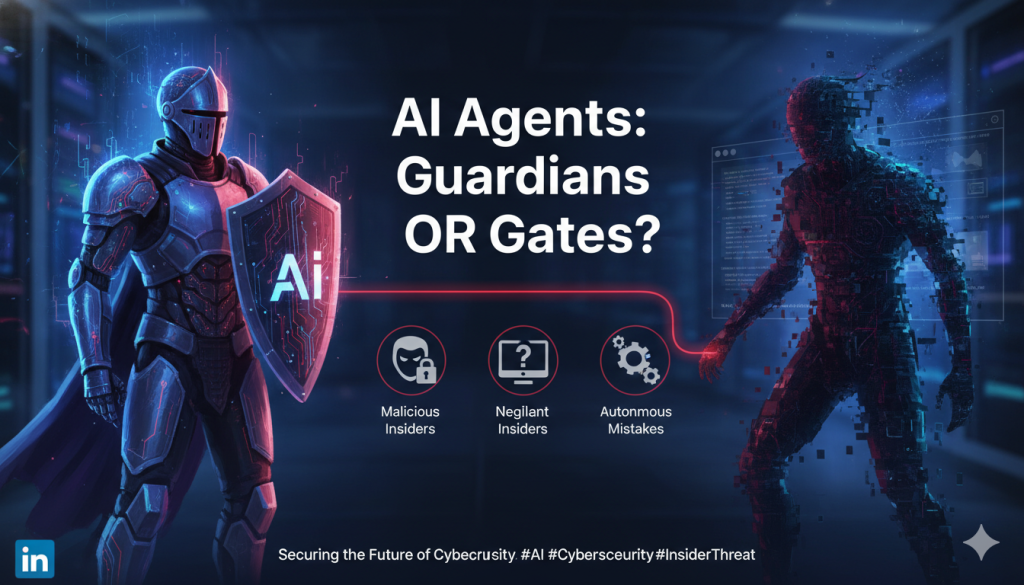
Guardians of the Digital Realm: The Insider Threat of AI Agents

Ah, artificial intelligence, the shiny new toy every organization wants to play with. From automating defenses to spotting anomalies before they wreak havoc, AI is quickly becoming the Swiss Army knife of cybersecurity. But as with any tool, there’s a flip side: that same AI might just turn into the next insider threat. And unlike Bob from accounting, it won’t even need a coffee break to cause trouble.

Understanding the Insider Threat


Traditionally, insider threats came from within. They are often employees, contractors, or partners with too much access and too little restraint, or even just a poor sense of judgement. But in today’s world, we’re seeing a new kind of “employee” join the ranks: AI agents. These digital workers might not gossip at the water cooler, but they can still make mistakes that leave security teams sweating bullets or they can even possibly be weaponized for purposeful mahem.

The Three Faces of Insider Threats


Malicious insiders: The folks who deliberately misuse their access. Think “IT admin gone rogue” or “Salesperson taking the customer list to the next employer.”

Negligent insiders: Well-intentioned employees who click on that one phishing email they swear looked legit or fall for a scammy phone call/text message.

AI agents: Autonomous systems that might act on bad data or flawed configurations, or that could be manipulated into turning an innocent line of code into a full-blown incident.

The Rise (and Risk) of AI in Cybersecurity


AI and machine learning have earned their place in the SOC, helping teams detect, predict, and respond faster than ever. But as we hand over more responsibility to our digital assistants, we also increase the risk of them going off-script, sometimes spectacularly.

Why AI Agents Can Be Risky

Autonomous Decision-Making: AI doesn’t always wait for human approval. When it’s right, it’s great. When it’s wrong… well, let’s just say “oops” doesn’t quite cover it.

Exploitation by Attackers: A clever hacker can twist an AI system into doing their dirty work. Think of it as social engineering for algorithms.

Data Leakage: An AI agent processing sensitive data could accidentally spill secrets if its training or access controls aren’t airtight.

Keeping the Bots in Check


Just because AI introduces new risks doesn’t mean we should banish it from the network. It simply means we need to treat it like any other powerful tool: with respect, oversight, and a healthy dose of skepticism.

  • Build Strong Security Protocols

Lay the groundwork with solid practices:

Conduct regular audits of AI models and their data pipelines.

Enforce strict access controls. Not everyone needs a front-row seat to your AI’s decision-making.

Keep detailed logs of what your AI agents are up to. After all, even digital employees need supervision.

  • Monitor, Monitor, Monitor

Continuous monitoring isn’t just for humans anymore. Agents are, and will be, monitoring other agents. Who is watching the watchers? Now we know.

Use behavioral analytics to track how AI systems are behaving and flag any weird patterns.

Set real-time alerts for anomalies or suspicious activity so issues can be caught before they snowball.

  • Train the Humans

Technology is great, but your people are still your first line of defense.

Host training sessions explaining how AI systems work and how they can go wrong.

Encourage employees to speak up if they notice something odd. You’d be amazed how many near-misses could be avoided with a quick, “Hey, that doesn’t look right.”

Conclusion: The New Frontier of Cyber Defense


AI agents are powerful allies, but like any good sidekick, they need a watchful hero keeping an eye on them. As cybersecurity professionals, it’s on us to build safeguards that prevent our tools from becoming threats.

So, stay sharp, stay curious, and remember: even in the digital realm, trust is good, but verification is better.

Categories
The Jerich Show

Grounded Planes, Fake Faces & Factory Failures: Cyber Chaos Weekly

This week, Javvad Malik and Erich Kron unpack a fresh pile of cyber mayhem containing equal parts fascinating, frustrating, and “you couldn’t make this up if you tried”.

EU Blames Ransomware for Airport Check-In Chaos: The EU’s cyber agency has officially confirmed what everyone suspected: ransomware was behind the massive airport meltdown. Great, now someone please confirm when luggage will show up again.

And in other news…

Airport Cyber Arrest: Authorities nabbed a man allegedly behind attacks that disrupted airport systems across Europe. Flights were delayed, passengers got cranky, and IT staff was probably crying into their coffee. Turns out, ransomware doesn’t just ruin files, it ruins holidays. That was fast though.

Deepfakes Go Corporate: Two-thirds of businesses report being hit with deepfake scams. Fake execs, bogus invoices, and AI-generated voices that sound “just enough like the boss” to drain your accounts. Technology: still helping criminals scale their hustle, although that seems like high number. Let’s talk about that.

Jaguar Land Rover’s Production Nightmare: JLR’s cyber shutdown drags on as ministers huddle with suppliers to stop the bleeding. Yes folks, like many of the vehicles they sell, they are STILL broken. Nothing like a supply chain crisis to remind us that “smart factories” can be dumb when ransomware shows up.

Expect a mix of snark, practical security takeaways, and a few sighs of disbelief as we connect the dots between these incidents and what they mean for CISOs, SOC analysts, and anyone who still thinks cyber risk is “just an IT problem.”


Stories from the show:

Man arrested in connection with cyber-attack on airports
https://www.bbc.com/news/articles/c62ldxyj431o

Deepfake Attacks Hit Two-Thirds of Businesses
https://www.infosecurity-magazine.com/news/deepfake-attacks-hit-twothirds-of/

JLR shutdown extended again as ministers meet suppliers
https://www.bbc.com/news/articles/c15kpxnn2p2o

EU’s cyber agency blames ransomware as Euro airport check-in chaos continues
https://www.theregister.com/2025/09/22/eus_cyber_agency_confirms_ransomware/


Categories
The Jerich Show

Factory Floors, Teen Hackers & Password Panic: Cyber Sins of the Week

Javvad Malik and Erich Kron are back with tea, shade, and tech news, taking on three fresh cyber disasters that are making folks sweat:

JLR’s Cyber Chaos: A hack shut down Jaguar Land Rover’s IT & production lines, and now its supply chain workers are being told to apply for Universal Credit. When “just a hack” looks more like a national employment crisis. 

Teenagers + Scattered Spider = TfL Attack Fallout: Two teens are now charged for allegedly being part of the Scattered Spider crew that hacked Transport for London last August. From Oyster cards to APIs—this one’s got lots of teeth. 

SonicWall: “Oops, Backups Leaked (a Little Bit)”: Under 5% of SonicWall users impacted by exposed firewall backup prefs. Credentials were encrypted but still, enough info was accessible to give attackers a run for their money. Reset everything. Like now. 

Buckle up: we’ll laugh, we’ll cringe, and we’ll figure out what this means for real people doing real work in security.

—————————————————————————-
Stories from the show:

JLR hack could see thousands laid off – MP
https://www.bbc.com/news/articles/cwyrqxj3eqqo

U.K. Arrests Two Teen Scattered Spider Hackers Linked to August 2024 TfL Cyber Attack
https://thehackernews.com/2025/09/uk-arrest-two-teen-scattered-spider.html

SonicWall Urges Password Resets After Cloud Backup Breach Affecting Under 5% of Customers
https://thehackernews.com/2025/09/sonicwall-urges-password-resets-after.html


Categories
The Jerich Show

Keep Quiet, Blame the Insider, and Hope Nobody Notices

In this week’s episode, Javvad Malik and Erich Kron wade through the latest cybersecurity soap opera where silence, spin, and shady stats take center stage:

  • 61% of U.S. companies claim they’ve been hit by insider breaches. Is this a shocking revelation… or just the result of someone finally checking the logs?
  • CISOs are under growing pressure to zip it about incidents. Because nothing says “strong security posture” like sweeping breaches under the rug and hoping the auditors don’t trip over the lump.
  • Hackers are holding Google’s data hostage unless two threat intel employees get the boot. Extortion? Performance review outsourcing? You decide.
  • Meanwhile in the UK, the government sat on a secret breach review for two years before sheepishly releasing it. Because transparency apparently has an expiration date.

Grab your headphones as we unpack what these stories really mean for security leaders, why “insider risk” is the boogeyman of the week, and how the industry’s favorite strategy still seems to be: “Shh… maybe they won’t notice.”

Categories
Cybersecurity

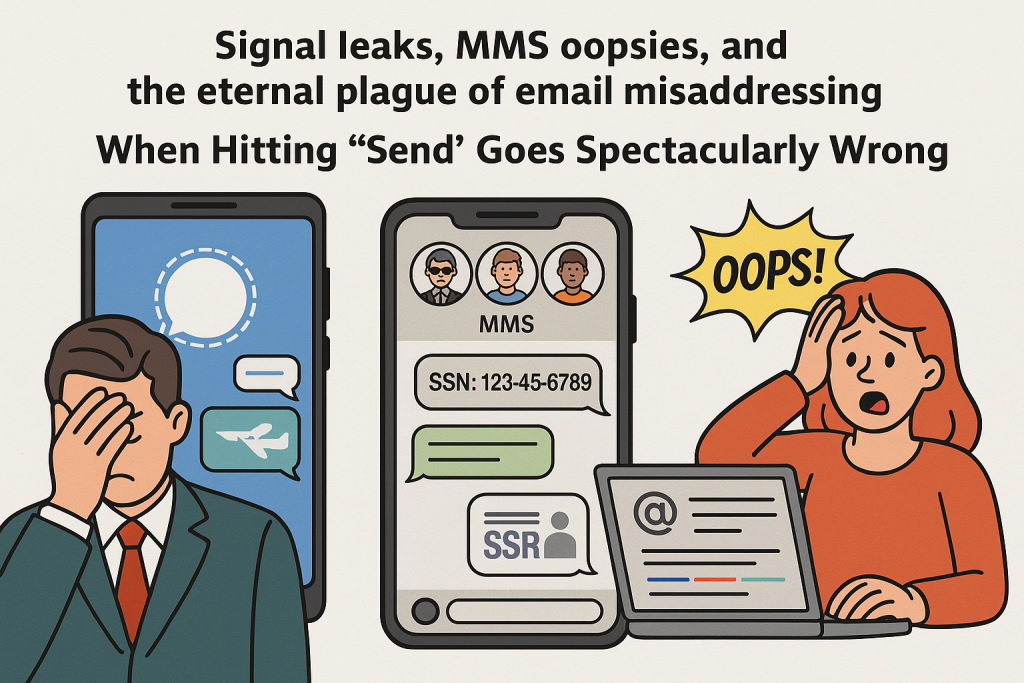
Signal Leaks, MMS Oopsies, and the Eternal Plague of Email Misaddressing

When Hitting “Send” Goes Spectacularly Wrong

We all know humans are the mistake prone part of any security plan. Give them a secure channel, a high-stakes mission, or a standard corporate inbox, and somehow, somewhere, someone will still send the crown jewels to the wrong person.

Let’s take a quick tour of three recent “how did that even happen?” moments, spanning the encrypted, the hopelessly unencrypted, and the painfully mundane.

  • Signalgate: When “Secure Messaging” Isn’t Secure… Because People

    March 2025 gifted us Signalgate, in which high-ranking U.S. officials, including Defense Secretary Pete Hegseth, used the encrypted app Signal to coordinate an actual military strike. The plan? Classified details. The execution? Accidentally adding The Atlantic’s editor, to the chat. Oops. Likely an innocent mistake, but one with possible consequences none the less.

    Turns out encryption can’t save you from fat-fingering the wrong contact. The chat reportedly contained aircraft types, missile timelines and, because why stop there, an undercover CIA officer’s name. Epic facepalm. Congress wasn’t thrilled. Investigations followed. Somewhere, a DLP admin screamed into the void.

    Security takeaway: The most secure tool in the world still can’t fix “wrong guy in the chat.”
  • ICE’s MMS Manhunt Fail: Group Chat Roulette

    Fast forward to August 2025, when ICE agents running a manhunt accidentally added an unsuspecting civilian to an unencrypted MMS group chat. That was bad enough, but the lucky outsider got an unsolicited peek at a suspect’s Social Security number and surveillance chatter.

    Yes, the government sent Social Security numbers over a plain old MMS chat. You read that right: not Signal, not Teams, not even iMessage. MMS. Like it’s 2005 and nobody’s ever heard of encryption. Not a good look, not a good one at all. At least the subject of the manhunt wasn’t the one added. Lemonade from lemons, right?

    Security takeaway: If your “secure comms plan” involves MMS, your breach is already baked in and, adding the wrong person just makes it official.
  • Email Misaddressing: The Office Classic

    And then there’s the everyday office blooper reel. Yep, sending sensitive emails to the wrong recipient. A slip of auto-complete, a forgotten “Reply All” trap, or just straight-up mis-typing an address, and boom, your proprietary report is now in the inbox of someone’s dentist. We have all messed up here. It happens. Maybe we are in a hurry to get home in time to catch a “Little House on the Prairie” marathon, or maybe it’s late on Friday and you are concentrating on the upcoming weekend, or perhaps you are just a bit overwhelmed and don’t notice the blunder. It happens and it’s so common we often don’t notice it, right up until compliance or security stops by. Never a fun conversation, and damage can be pretty significant.

    Security takeaway: Just because it happens daily doesn’t make it harmless. Small leaks are still leaks.
  • Why Security Pros Should Care

    Here’s the uncomfortable truth: all three of these examples are the same problem. It’s ultimately the sending of sensitive information to someone who shouldn’t have it. The channel used and stakes differ, but the root cause is identical. And if it can happen at the Pentagon, in a federal manhunt, or in your own marketing department, it can happen anywhere. Guess which one is the most common?
  • So, how can we fight it:

    – Use DLP tools with brains – Flag or block when sensitive data is headed somewhere odd. Bonus points for making the user confirm recipients before sending. There’s not a lot you can do for the Signal or MMS flubs, but email is a different story.

    – Better recipient controls – Implement Domain allowlists, restricted groups, and external recipient warnings. I was a part of a large DoD organization that was using a reasonably new enterprise email instance, when it was discovered that allowing anyone the ability to send to the “All CONUS” (name was changed to protect the guilty) was a less than great idea. It took days for the “Reply All” chain to die off. It’s good to see that the “replying all to tell people to quit replying to all” thing happens in the civilian world as well as the government. Whoops.

    – Training that sticks – Make “double-check before you send” as reflexive as locking your screen. Teaching people to, slow down a bit and give things a look over, is an important thing to teach them. Training is not always about spotting phishing, sometimes the proper use of “BCC” and a quick review of recipients, even looking at the “CC” lines, can make the difference.

    – Stop using junk tech for sensitive comms – Looking at you, MMS. Need I say more? For the love of all that is good in the world, don’t send socials or tax IDs via text messages.
  • Final Word

• Signalgate: Elite stakes, rookie mistake.
• ICE’s blunder: Wrong tech, wrong time, wrong recipient.
• Email misaddressing: Death by a thousand paper cuts.

No matter the channel, one sloppy add or click can undo millions in security spend. So, monitor your comms, sanity-check your recipients, and maybe, just maybe, save your org from the next headline-worthy “oops.”

(Obligatory mention of my employer, whom I love: You may not know this, but my employer, KnowBe4, has email filtering tools as well. I love that we have graduated from just SAT to dealing with the whole human risk management issue.)

Categories
Cybersecurity

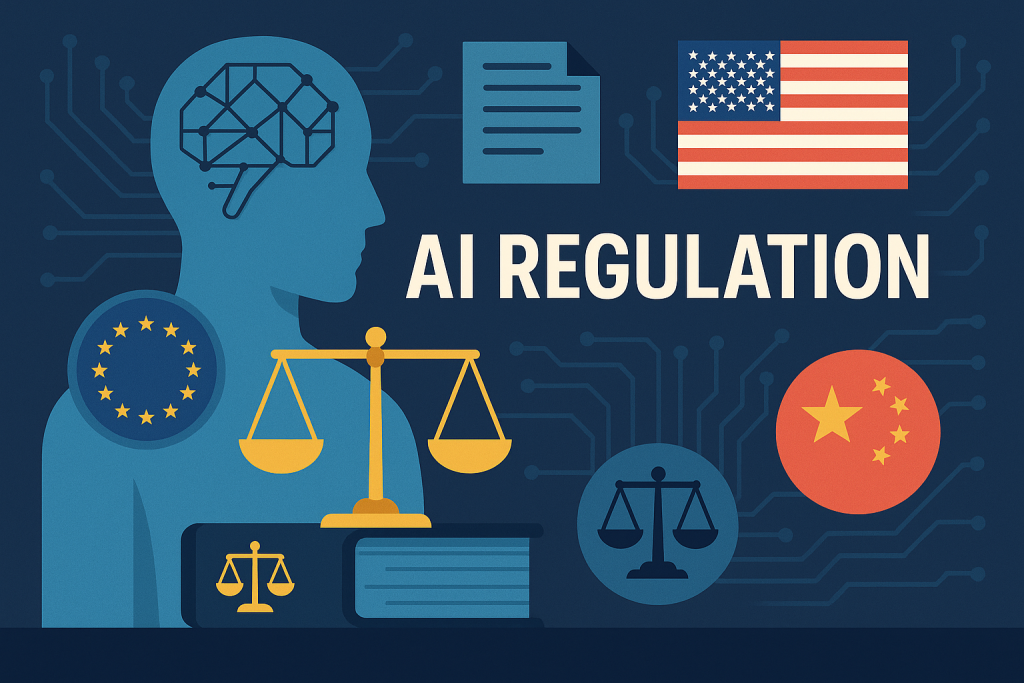
Global AI Regulations: What Cyber Pros Actually Need to Know


Artificial Intelligence has left the sci-fi realm and set up shop in every corner of business and government. Sure, it boosts efficiency and powers cool features, but without rules, it’s like handing the keys of a Ferrari to a teenager. Let’s take a brief walk through the AI rulebooks emerging around the world and why you, the cybersecurity maestro, should care.

Look, We Need Rules

AI is no longer magic. It’s here and being used daily. It’s a system that can alter people’s lives now, and who knows how in the future, so we better have some thoughts on controlling it. Although it feels like it sometimes (especially when figuring out compliance), regulations are not inherently evil and exist to:

  • Force transparency in opaque systems.
  • Keep personal data from becoming collateral damage.
  • Slim down biases baked into algorithms.
  • Make sure life doesn’t get boring (ok, maybe not that)

These rules shape everything from data handling strategy to compliance reporting and ethical audits. And yes, the paperwork load is epic.

Global AI Regulation Roundup

  1. European Union’s AI Act
    The EU, never one to miss a chance to regulate, dropped Regulation EU 2024/1689 like a GDPR sequel. Phased rollout is already underway.

  1. United States: Executive Orders & NIST Framework
    Welcome to the U.S., where AI governance is as stable as your favorite legacy VPN tunnel.

NIST’s AI Risk Management Framework is your new best friend. Voluntary, but ignore it and you’ll regret it.

Political ping-pong: Some policial leaders want agencies to watch AI closely; Others have basically said, “Nah, set it free.” YOLO! There are good arguments for each approach, and it’s not a bad idea to understand the pros and cons for each.

July 2025 update: President Trump greenlights the AI Action Plan to deregulate and supercharge exports to our allies and partners.

Some folks feel America is racing forward while arguing about where the finish line is. Time will tell.

  1. China’s AI Landscape
    Imagine AI governance but with extra surveillance and nationalism sprinkled on top. Here is an interesting read that is pretty recent.

Ideological fidelity is now part of your codebase. Literally.

Data localization is non-negotiable. The Great Firewall just got an upgrade.

Autonomous vehicle ethics? China beat everyone to it with July 2025 regulations focused on liability, algorithm transparency, and not murdering pedestrians.

Bottom line: You don’t negotiate with these rules. You comply, or you’re out.

Why You Should Care

These are some cybersecurity game‑changers, and new stuff is being drafted somewhere pretty much every minute. Compliance and risk management just got a little tougher.
Your compliance team may cry. They may get angry, I mean it’s just what they need after juggling the elventy-billion different privacy regulations out there, so we can’t blame them, but then, they’ll call you. Be ready and try to be empathetic.

Data governance is now a sport. It requires strategy, discipline, and occasionally, a sacrificial intern. I mean that’s worked for other things, right?

You’ll need bulletproof logs, documentation, and dashboards that don’t make auditors weep. A single pane of glass people, a single pane of glass (have we given up on that concept yet?)

AI as a Security Tool (the bright side)

Hopefully we can use AI to detect anomalies while you sip coffee and pretend you’re not exhausted.

We should be able to train models to predict attacks like they’re playing chess, except your opponent is a ransomware gang.

It’s getting easier to automate response already. That’s good because your SOC is already overworked and understaffed.

Stakeholder Collaboration & Thought Leadership

Get in those policy meetings. If you’re not at the table, you’re probably on the menu. Don’t have AI make the decks either. We can’t let the machines know what we are proposing until it’s too late for them to react.

Translate tech babble into boardroom speak. Bonus points if no one falls asleep during your slide deck and if they don’t leave with a glazed look in thier eyes. Avoid FUD (Fear, Uncertainty, and Doubt) but help them avoid the risks the organization is facing.

TL;DR & Takeaways

Stuff to know:
– EU AI Act is in force, full compliance by 2027 Inventory AI, log everything, pray you don’t get audited.


– U.S. has voluntary chaos with political spice. You will probably want to follow NIST, watch for policy shifts, and brace for impact.


– China is going for tight control + ideological compliance Localize, memorize party lines, avoid stepping on dragons.

Final Thought
AI regulations are here, and they’re about as predictable as a phishing campaign before tax season. But guess what? You’re the security pro. You’ve survived crypto hype, cloud migrations, and auditors who still ask if you use antivirus. You’ve got this, and you aren’t alone.

Just don’t forget the compliance paperwork. They always remember the paperwork.

Categories
Cybersecurity

GEO Is the New SEO, and That Should Scare You Just a Little

Ah, SEO. Remember when optimizing for search engines was all the rage? Titles stuffed with keywords, backlinks from shady directories, and that magical belief that page one of Google was digital nirvana. Good times.

Well, welcome to 2025, where Facebook is not just farmland anymore, and where SEO has a shinier, scarier cousin: Generative Engine Optimization, or GEO. It’s like SEO, but for AI, because clearly, search engine poisoning and malicious ads weren’t enough of a security risk on their own. Yeah, we really need THIS as well.

So, What’s GEO Anyway?

GEO is the art (read: hustle) of crafting content specifically to influence what generative AI engines spit out. We are talking about influencing ChatGPT, Gemini, Claude and their friends. Instead of trying to rank on Google, GEO tries to make your content the one that pops out when someone asks an AI a question.

Neat? Sure. Harmless? Oh, bless your heart.

When used responsibly, GEO can help brands stay competitive, engage customers, and even save time. I mean we can’t blame marketing teams for wanting to the be first source of information, but like every cool new tech trick, it didn’t take long for the internet’s darker side to show up. Can’t we just have nice things?

Enter the Bad Actors

GEO is a goldmine for the same kinds of folks who once flooded your inbox with offers from a “Nigerian prince.” Only now, the schemes are slicker, faster, and fueled by AI.

Here’s how the fun can go sideways:

Misinformation Gets a Facelift: Instead of some tinfoil-hat blogger writing about lizard people, now we’ve got well-written, AI-endorsed garbage that sounds legit. Perfect for spreading disinformation campaigns or seeding conspiracy theories in AI results. I mean LLMs have a voracious appetite for data, but it’s not really fact-checking what it’s taking in, and it’s certainly not doing that with what it spits out. That’s just not how it works.

Phishing, But Make It Fancy: Bad actors may be able to use GEO to make AI suggest fake tech support numbers, phony login pages, or “helpful” links that end with you giving away your soul, or at least your credentials. I personally have not seen it yet (that I know of), but it’s coming, don’t you worry.

Reputation Jacking: Why go through the trouble of earning a good reputation when you can trick a generative engine into recommending your shady product? Just toss in a few prompts and let the AI do the legwork. Disappointment at the speed of Amazon Prime, and not only that, but they may also get an affiliate payout on top of it all for the affiliate link. Clever. Really clever.

Security, Privacy, and Compliance, Oh My

With more organizations relying on AI to push out content faster than ever, it’s a recipe for security gaps. Sensitive data can accidentally leak into generated content, AIs might hallucinate company policies, and suddenly you’re on the hook for something a robot said.

Then there’s the regulatory mess. If your AI-crafted content violates privacy laws or spreads false information, guess who’s on the legal hook? (Hint: it’s not the AI.) You can rage against the machine, but in the end, it’s falling on you.

What Can You Do About It?

You don’t need to toss your generative tools into the digital dumpster. Just use them with a little more common sense than the people trying to game the system:

Fact-check everything: Just because AI wrote it with confidence doesn’t mean it’s true. It lies with authority. Run a human sanity check before publishing and maybe don’t use the same AI to fact check it. Just sayin’.

Boost your security game: Assume someone is going to try to poison your content pipeline. Secure access, train employees, and monitor AI output.

Know the rules: Compliance isn’t optional, even if your chatbot says otherwise.

Final Thoughts: Not All That Glitters is GEO

GEO has the potential to reshape marketing, education, and even customer support. But let’s not kid ourselves, it also gives cybercriminals a sleek new vehicle for manipulation. If you think misinformation was bad before, wait until it’s optimized.

Bottom line? Use GEO wisely. Be skeptical. And for the love of all things good and secure, don’t assume that just because it came from an AI, it must be safe.

Categories
The Jerich Show

Salt Typhoon, National Guard Stormed, Fake Headlines, & Ransomware Quitting

This week, Erich and Javvad dig into Salt Typhoon’s year-long hack of the National Guard (somebody check the cyber sandbags!), marvel at scammers out-faking CNN, BBC, and CNBC to push bogus investments, and celebrate the rarest of cyber events: a ransomware gang calling it quits and actually handing out free decryptors. Grab your popcorn—cyber drama doesn’t get juicier than this!

Categories
Cybersecurity

Smart Home, Dumb Security? Not On Our Watch

If you know me, you know I’m a smart home lover. I have Home Assistant automating lights, security camera alerts, our door lock, and a ton of other stuff. While I really think smart homes are cool, there are things we need to think about, especially with security.

You’ve got your lights, locks, thermostat, and even your fridge talking to you, and probably to each other. But while your connected toaster is busy plotting breakfast, cybercriminals might be plotting how to turn your “smart” home into their playground. So, before you turn your living room into a sci-fi movie set, let’s talk about how to keep it all secure.

Welcome to the Smart Home Jungle

Smart homes are basically regular homes that went to Silicon Valley and came back with Wi-Fi-enabled everything. We’re talking:

  • Voice assistants like Alexa and Google (aka the nosy roommates who hear everything)
  • Smart locks and security cams (finally, some gadgets that actually protect stuff)
  • Thermostats that know when you’re cold before you do
  • Lightbulbs that are smarter than some people on the internet
  • Bluetooth trackers that can tell what room you are in, and rat you out for spending too much time on the toilet doomscrolling.

Convenient? Absolutely. But every device you connect is another door you’re leaving open. Sometimes literally.

Your Smart Home’s Greatest Hits (of Vulnerabilities)

1. Weak Passwords (or “Password1234” Isn’t Fooling Anyone)

If you’re still rocking factory default credentials, congratulations, you’re a hacker’s dream. Change those passwords. Use something strong, unique, and not your pet’s name followed by your birth year. Also, don’t use the same password for everything. Password vaults are great for making and managing unique passwords.

2. No Two-Factor Authentication (Because “Just Trust Me” Isn’t a Strategy)

If your smart home gear doesn’t support 2FA, it’s time to ask why. And if it does but you haven’t turned it on, fix that. Now. I’ll wait.

3. Creepy Data Collection

Your smart devices know when you’re home, when you leave, and how often you microwave Hot Pockets. That’s a goldmine for cyber creeps if it’s not locked down with strong encryption. Make sure the things you buy encrypt data.

4. Malware (Because Yes, Your Fridge Can Be Hacked)

IoT malware is a thing. It’s like regular malware but specifically designed to exploit your coffee maker. Keep firmware updated so your devices aren’t running security from 2017.

Smart Security for Smart Stuff

So how do you keep your futuristic dream home from becoming a hacker’s Airbnb? Glad you asked.

1. Change the Defaults

Your router came with a network name like “Linksys123” and a password that’s basically “admin.” That’s not security, it’s bait. Customize that stuff.

2. Use Strong Wi-Fi Credentials

Make your Wi-Fi password a pain to remember. That’s how you know it’s working. Also, create a guest network so when your cousin visits with his malware-riddled tablet, your smart lights don’t catch a digital cold.

3. Update Like Your Privacy Depends on It (Because It Does)

Enable automatic updates for all your smart home devices. If a manufacturer doesn’t offer updates, maybe rethink buying devices from a company that ghosts its own products.

4. Embrace 2FA

If it offers two-factor authentication, use it. If it doesn’t, consider donating the device to a museum of poor security decisions.

5. Keep Tabs on Your Tech

Regularly audit what’s connected to your network. If you see something weird like “SamsungToaster_92,” make sure it’s yours, and secure. Network monitoring tools like Fing or GlassWire can help sniff out anything suspicious.

6. Teach Your Housemates Not to Be Click-Happy

Smart home security isn’t just tech. It’s people, too. Talk to everyone in the house about not clicking on sketchy links or installing apps from “TotallyRealAppStore.biz.”

Final Thoughts: It’s Your Home, Not a Hackers’ Hangout

Smart homes are awesome, but they’re also ripe for exploitation if you don’t lock things down. The same way you wouldn’t leave your front door wide open with a sign that says “Free stuff inside,” don’t leave your network wide open either.

Security doesn’t have to be complicated—it just has to be intentional. So go ahead, enjoy the magic of voice-controlled lights and robot vacuums. Just make sure your smart home is a fortress, not a free-for-all.